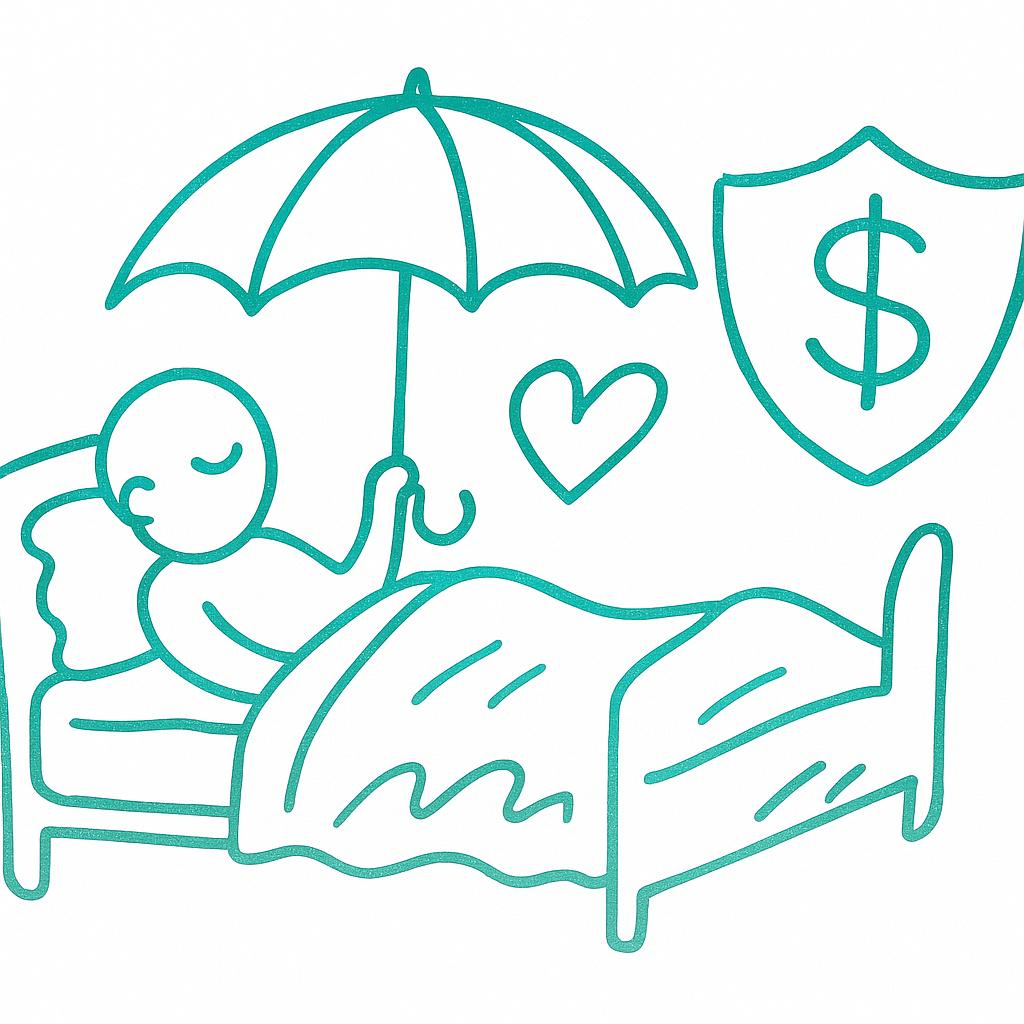
Any Occupation TPD pays when you can’t work in any job you’re suited to by education, training, or experience. Own Occupation TPD pays when you can’t work in your specific occupation. The latter is easier to claim but only available outside super for eligible occupations.
Two different definitions, two different outcomes
Total and Permanent Disability cover is defined by when it pays out. The trigger isn’t the disability itself — it’s whether the disability prevents you from working, and the bar for “prevents you from working” depends on which definition applies to your cover.
Two main definitions exist in the Australian market: Any Occupation and Own Occupation. They sound similar but they’re meaningfully different. Understanding which one applies to your cover is one of the most important things you can know about your TPD insurance.
Any Occupation TPD — the broader test
Under Any Occupation TPD (called Standard Occupation under the SMSF Master Insurance Plan), you’re considered totally and permanently disabled when you’re permanently unable to work in any occupation you’re reasonably suited to by your education, training, or experience.
Read that carefully. It’s not just your current job. It’s any job within your skill set. So if you’re a tradesperson who loses use of your hand, the question isn’t just whether you can do your specific trade — it’s whether you could realistically work in any related role you’d be suited to. Maybe you could do estimating, project management, or supervisory work.
Any Occupation TPD pays out when the insurer is satisfied you can’t do any of those alternative roles either. It’s the bar you have to clear, and it’s set higher than people often assume.
Own Occupation TPD — the narrower test
Under Own Occupation TPD, you’re considered totally and permanently disabled when you’re permanently unable to work in your specific occupation. The test is whether you can do your specific job — not whether you could theoretically retrain for a different one.
Take the same tradesperson with the same hand injury. Under Own Occupation cover, the question is just whether they can do their trade. If they can’t, the claim pays — even if they could theoretically retrain as an estimator. The cover acknowledges that your specific skill set has value, and losing it represents a real economic loss even if you could (in theory) do something else.
Own Occupation cover is meaningfully easier to claim. The test is narrower, so more disability events qualify.
Which one’s better?
Own Occupation is better at claim time. That’s not really debatable — a narrower test means more conditions qualify.
But Own Occupation has restrictions on who can buy it. Under the SMSF Master Insurance Plan, Own Occupation TPD is only available to specific occupational categories:
- Professional — Accredited higher education qualification, belong (or eligible to belong) to a professional body, base salary over $80,000, and work in an office environment in a sedentary capacity
- Senior Management — Part of senior management, base salary over $80,000, work in an office environment in a sedentary capacity
If you don’t meet these criteria, Own Occupation isn’t available under this plan. Many other retail policies have similar restrictions — Own Occupation cover is generally limited to white-collar professional roles with high-value skill sets.
So for many people, the comparison is academic — Standard Occupation is what’s available, and the question is just whether to take it inside super or outside. For Professionals and Senior Management who qualify for both, the question becomes a real choice.
The structural difference — inside vs outside super
There’s also a structural difference. Standard Occupation TPD can be held inside super (where the fund pays tax-deductible premiums) or outside. Own Occupation TPD generally has to be held outside super, because the Own Occupation definition doesn’t align with super law’s permanent incapacity test.
Through SMSF Insurance, the SMSF Master Insurance Plan structures it like this:
- Standard Occupation TPD is held inside the SMSF, with the fund paying tax-deductible premiums
- Own Occupation TPD (for eligible occupations) is held outside super, with the member paying personally
- Both can be held alongside each other — you don’t have to pick one over the other
Eligible Professionals and Senior Management can hold both layers — Standard Occupation inside super for cost-effectiveness, plus Own Occupation outside super for the easier claim threshold.
Cost differences
Own Occupation TPD is generally more expensive than Standard Occupation TPD, for the same cover amount. This makes sense — the narrower definition means the insurer is more likely to pay out, so the premium reflects the higher claim probability.
On top of that, Own Occupation premiums are paid by you personally (because the cover is outside super), so you don’t get the SMSF tax deduction. The combined cost difference is meaningful.
For high-income Professionals and Senior Management, the additional cost is often worth it. For lower-income earners, the additional cost might outweigh the benefit.
The practical decision
If you’re eligible for Own Occupation TPD and your income depends on a hard-to-replace skill set, Own Occupation is usually worth the additional cost. The difference at claim time can be the difference between a successful claim and a denied one.
If you’re not eligible for Own Occupation, Standard Occupation TPD inside the SMSF is what’s available — and it’s still meaningful, valuable cover. It just has a higher claim threshold.
Either way, having TPD cover is significantly better than having none.
| Choose the right TPD definition
Through SMSF Insurance, you can apply for Standard Occupation TPD inside the SMSF, Own Occupation TPD outside super (if eligible), or both. Get a quote and we’ll work out what fits. |
Quotes for SMSF TPD insurance are instant, and you can buy SMSF Life cover securely online.